
From critic to builder: Jay N. Kalala and the digital backbone of DBC

He first challenged the story of African business from a France 24 panel. Now he is the one coding the Diambilay Business Center's digital backbone. The portrait of a turn.
On the set of La Semaine de l'Éco, France 24's Friday economics show, Jay N. Kalala did not play the believer. A Congolese-German entrepreneur, he had come to say out loud what few guests put quite so bluntly — sitting across from a former French minister and the founder of a fast-rising pan-African network: doing business in Africa is, in practice, far harder than the prevailing talk admits.
Two years later, the same man is building the systems of the network he watched from the outside. The Diambilay Business Center did not hire him as a speaker but as an architect: he designs and codes the organization's digital infrastructure, from the public website to the ticketing app. Its German branch has already started building its own systems in-house.
Told that way, the path looks like a reversal. It isn't. It is the logical end of a simple, slightly abrasive idea: you don't change an ecosystem with speeches, you change it with tools that work.
The critic who didn't (yet) believe
Kalala's position was never Afro-pessimism. It was the position of a man who has built companies and knows the distance between a motivational talk and a system that runs on a Monday morning. Before he crossed paths with DBC, he had already built and operated several production platforms — a gym ERP, a financial-education platform, a B2B SaaS suite — and founded Narikia, a company whose job is to make other companies run cleaner: more traceability, less manual work, fewer blind spots where things quietly go wrong.
That ground is where his critique of African business comes from: not a shortage of energy or talent, but a shortage of infrastructure. Fragmented markets, payment systems that don't talk to each other, trust that's hard to industrialize, organizations that run on enthusiasm and stall the moment they need a back office. On the France 24 panel, that was the case he made, and he didn't soften it for the dominant narrative. The setting was not foreign to him: the world Élisabeth Moreno was defending and DBC's own already overlap — Paris, the diaspora, tech, the financing of women's entrepreneurship.
The day he tried it — then joined
The turn didn't come from an argument. It came from a room. Kalala eventually attended a Forum Richesses d'Afrique as a plain participant — the skeptic at the back. What he saw shifted the math: not slogans, but a network with real reach, political and business speakers, a diaspora audience that travels and pays to be there.
For a man whose reflex is to build, the conclusion was almost mechanical. Rather than criticize the missing piece — the systems — from the outside, build it. It was Ruth Bambi, CEO of DBC Germany, who made the call. "We are living in a digitalized world and DBC Germany will not be the last to jump on that boat," she had set as the heading. Kalala became the builder of that boat.
I have never doubted the capacity of the people.
What I have often doubted is the willingness of decision-makers to truly change things.
I believe in action more than words.
And that is exactly what I saw with my own eyes at the Richesses d’Afrique Forum in Paris 2025.
Gerald Ngongo Kalala, for the record
Under the public name sits a legal one: Gerald Ngongo Kalala. Born in the Democratic Republic of Congo, based in Germany, he belongs to that generation of diaspora entrepreneurs who refuse to pick one of the two continents and work both at once. Part of where he learned scale is the world of Cologne's trade fairs, where a system either holds up in front of thousands of visitors or fails at the door, in public.
The constant in his career isn't a sector, it's a method: sell and run real products rather than sell decks. His companies — Narikia among them — share a habit of turning promises into software that takes payments, measures, and holds. The detail of that track record lives on realjaynka.com. It is that operational credibility, more than eloquence, that made him the right name to call.
Narikia, the movement's hardware
Concretely, what Kalala brings to DBC has a name: Narikia UG × DBC Germany. The ambition isn't an app, it's a connected ecosystem. A public website that serves as the storefront. A single internal dashboard the team publishes from and pulls each channel's performance back into. An in-house ticketing platform, a jobs board, a survey tool. All of it in three languages — French, German, English — because the audience reads in all three.
The first real test isn't theoretical. It has a date: the Richesses d'Afrique Masterclass Germany 2026, on 13 June 2026 in Essen, where the app will have to sell and scan real tickets in front of a real room. In Germany that is not only a design problem: selling tickets through your own software runs into the country's fiscal and record-keeping rules, the sort of detail a serious system settles with a tax adviser before the doors open, not on the night. The Masterclass programme will bring that systems logic together with the faces of the movement, from Ruth Bambi to Danyo Ilunga.
What digital changes for a movement
There is a difference between a movement and an institution. A movement runs on attention: a packed room, a wave on social media. An institution runs on systems: you know who came, what sold, what needs following up, and you can do it again without starting from zero. Digitalization is exactly the line between the two.
Whoever ignores the age they live in ignores its opportunities.
We are living in the Information Age and moving into the AI Age.
Those who understand this shift will be ready for the future.
If the Essen ticketing holds on 13 June, the critic will have answered his own critique in the only way that interests him — by shipping. The rest — the speeches about Africa's potential — he leaves to others. He watches the dashboard.
More articles
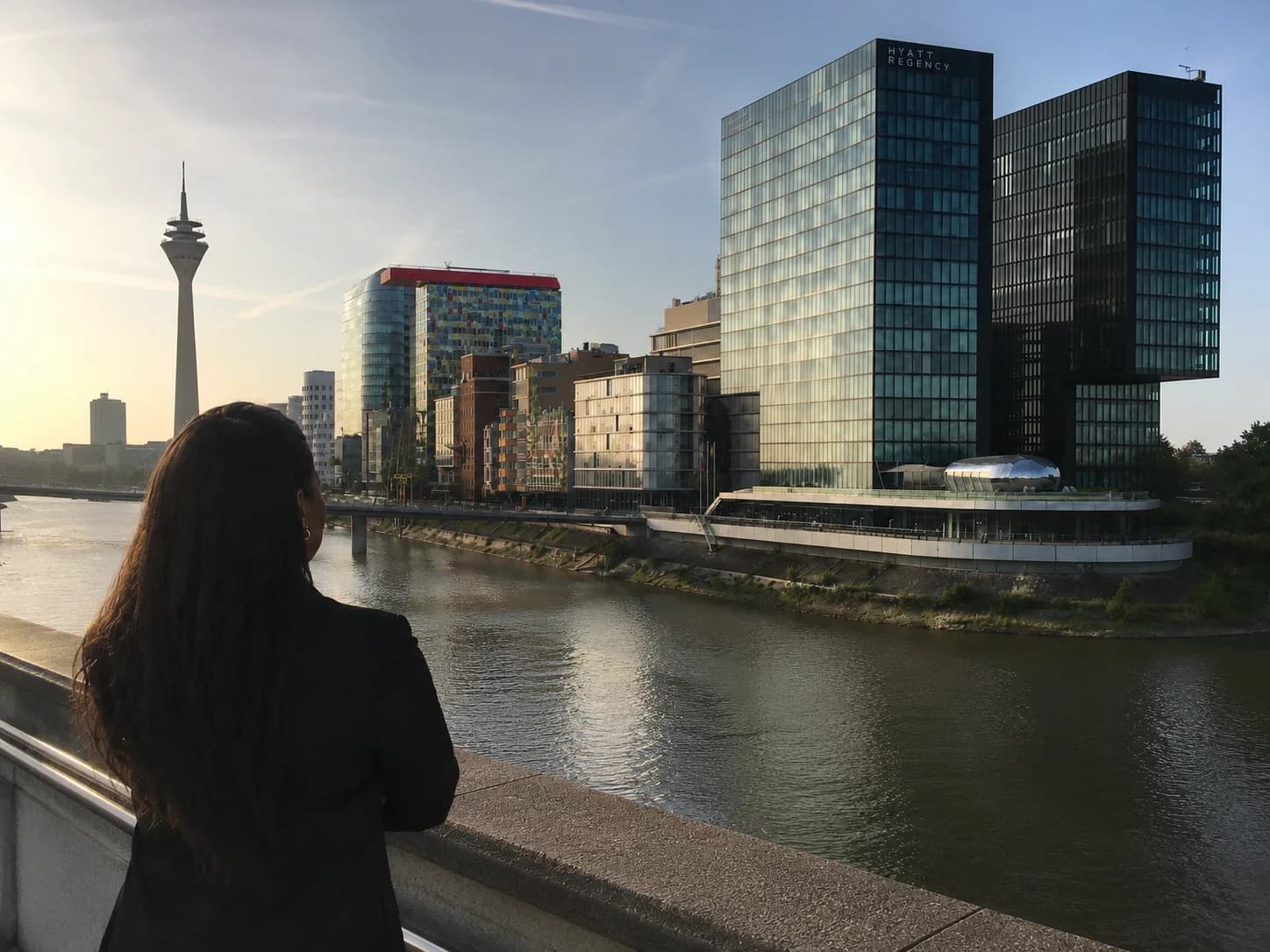
DBC Germany: why Düsseldorf, and what awaits Essen on 13 June 2026
A pan-African business movement is planting its German flag in the Ruhr. The choice is surprising — until you read the map.
DBC Germany
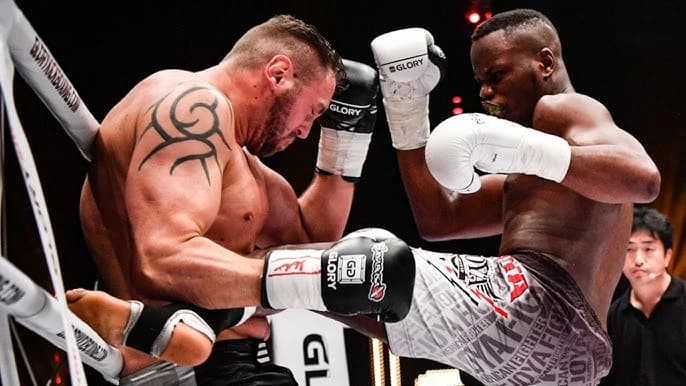
Danyo Ilunga joins DBC Germany in Essen: the Congolese-German icon in the diaspora's corner
A five-time kickboxing world champion as guest of honour at a business gathering. The surprise fades the moment you know the story.
DBC Germany
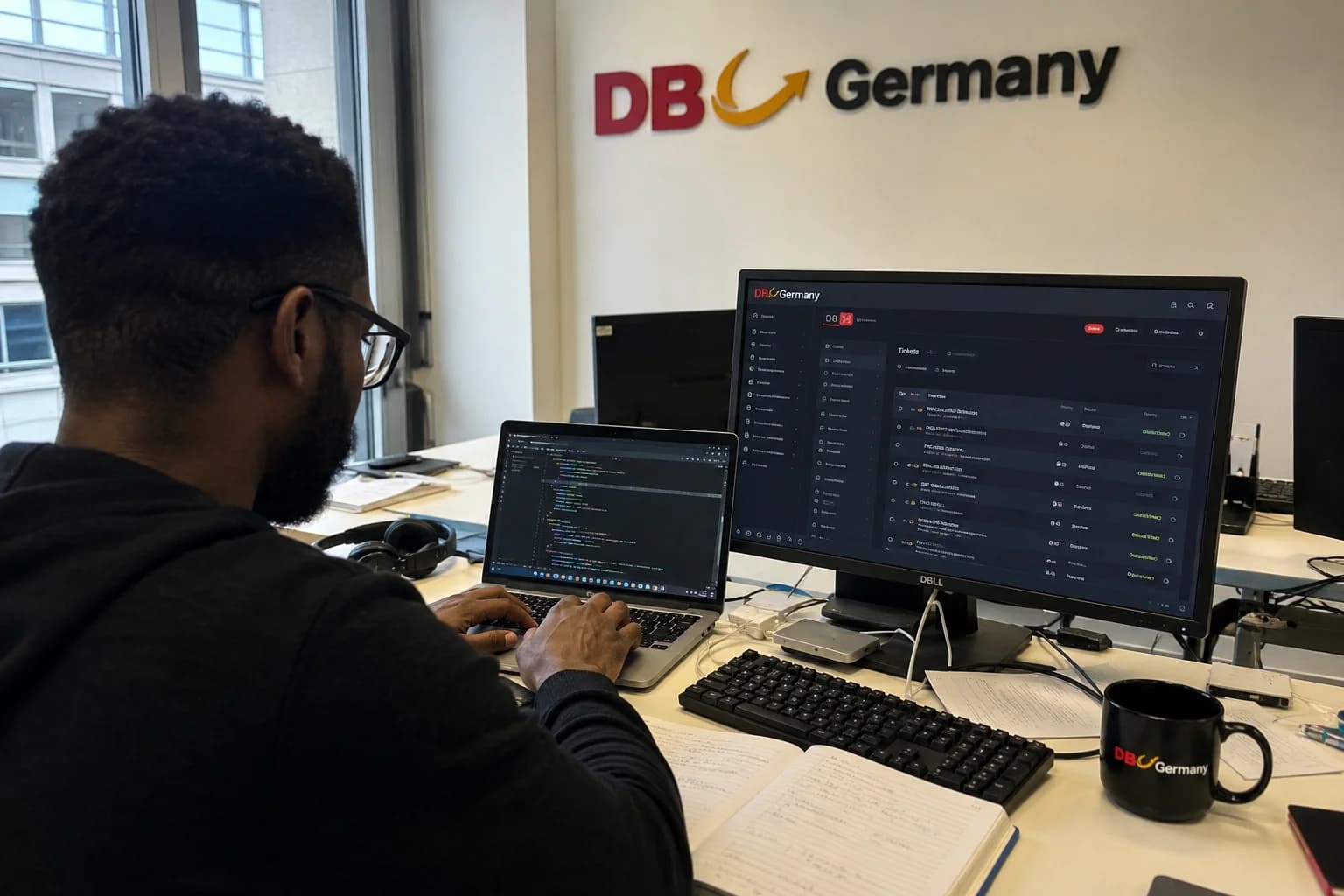
DBC Germany goes digital, betting on systems it builds itself
The Düsseldorf branch of Diambilay Business Center is trading rented software for an in-house ecosystem — and Richesses d’Afrique Masterclass Germany 2026 will be the first test.
DBC Germany