
DBC Germany: why Düsseldorf, and what awaits Essen on 13 June 2026
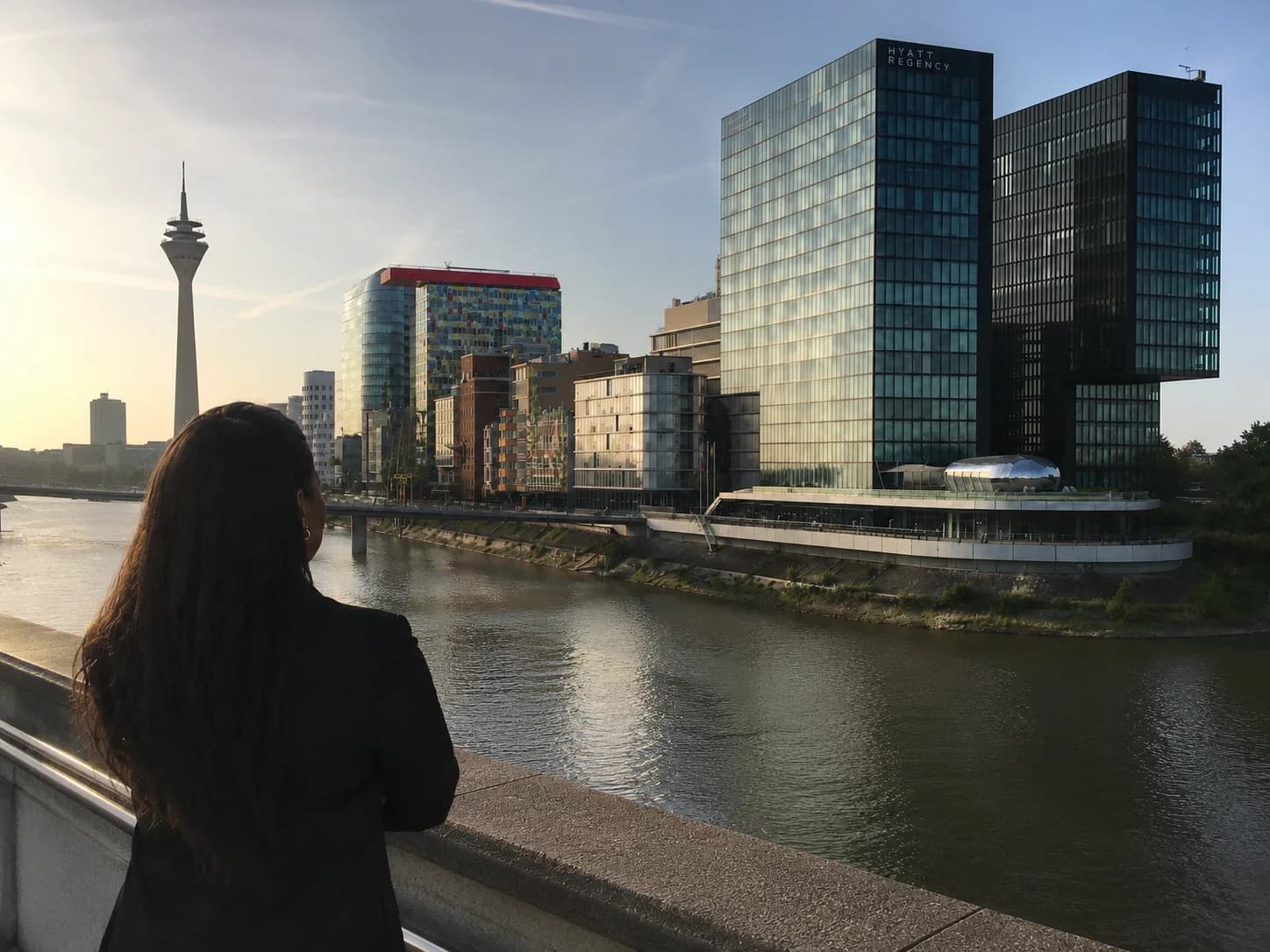
A pan-African business movement is planting its German flag in the Ruhr. The choice is surprising — until you read the map.
For a movement born in Paris that has already reached Montréal, the German flag could have gone up in Berlin, the political shop window, or in Frankfurt, the finance capital. The Diambilay Business Center chose Düsseldorf. And its first major German gathering will be held on 13 June 2026 in Essen — deep in the Ruhr, the old country of coal and steel.
The choice is surprising. It shouldn't be.
A subsidiary with a mandate
DBC Germany is not an informal club. It is a company under German law — a UG based in Düsseldorf — and the German branch of the Diambilay Business Center, the pan-African network that now counts nine country branches, from Kinshasa to Dakar by way of Paris, Brussels, London, Montréal and Libreville. Germany is its newest European link, and probably the most counter-intuitive. The mandate is plain: turn the German-speaking zone — Germany, Austria, Switzerland, what professionals call DACH — into a European anchor for the Richesses d'Afrique movement.
Why Düsseldorf
Düsseldorf is the capital of North Rhine-Westphalia (NRW), Germany's most populous state — over eighteen million people — and one of its richest, with economic output above €900 billion. That is not an accident of geography. The city lives on trade and trade fairs: Messe Düsseldorf is among the world's leading fair organizers, and the whole region breathes business-to-business exchange. For a network whose job is connecting entrepreneurs, it is natural ground. The city also offers what a brand wanting to be taken seriously looks for: institutions, chambers of commerce, a business fabric already turned outward.
The Ruhr, and the symbol of Essen
But the real reason is more human than accounting. North Rhine-Westphalia and the Ruhr hold some of Germany's strongest African diaspora communities — Ghanaian, Congolese, West and Central African families long settled in the region's cities. That is where part of the audience DBC wants to bring together actually lives. Before it is a prestige choice, Germany is a choice of audience.
And then there is Essen. A coal-and-steel town that, after industrial collapse, became a textbook case of reinvention: European Green Capital in 2017, home to the former Zollverein coal mine now on UNESCO's World Heritage list, the heart of a Ruhr metropolis of nearly five million people. It would be hard to find a backdrop that fits the movement's message better. A place that rebuilt itself, chosen by people who talk about rebuilding. The message doesn't need to be spoken; it's in the address.
13 June 2026: what is known
The Richesses d'Afrique Masterclass Germany 2026 is announced for 13 June 2026, in Essen. The detail — exact venue, full programme, ticketing — is still firming up, and DBC Germany will release it over the coming weeks. But the frame is known, and it rests on three names.
Ruth Bambi, CEO of DBC Germany, runs the event. Jay N. Kalala builds its infrastructure: the branch has already begun building its own systems, down to the ticketing app that will be tested that day. And Danyo Ilunga, one of Europe's most decorated kickboxers, born in Kinshasa and forged in Germany, will attend as guest of honour — a presence that carries, on its own, a story of exile, mastery and a second life that speaks directly to the diaspora.
"We are living in a digitalized world and DBC Germany will not be the last to jump on that boat," Ruth Bambi puts it — a line that carries both the technological ambition and the branch's state of mind.
Not an event, an infrastructure
The Masterclass is the visible part. Behind it, DBC Germany is building something less spectacular and more durable: systems it owns — website, internal dashboard, ticketing, jobs, surveys — and, to follow, an e-learning platform, RAEL, meant to extend the gathering well past 13 June. The point isn't to throw a good evening, but to install a standing institution, where many diaspora movements burn out on one-off events.
That is also what sets the German approach apart. An event succeeds or fails in a day. An infrastructure is measured over years: who comes back, what sells, what gets built between editions. DBC Germany has chosen to bet on the second.
Which leaves the question of the backdrop. Why the Ruhr? Because a movement that talks about transformation chose the region that, in Germany, proved it. On 13 June, in Essen, we'll see whether the place and the message answer each other. The German-African business world will be watching too.
More articles
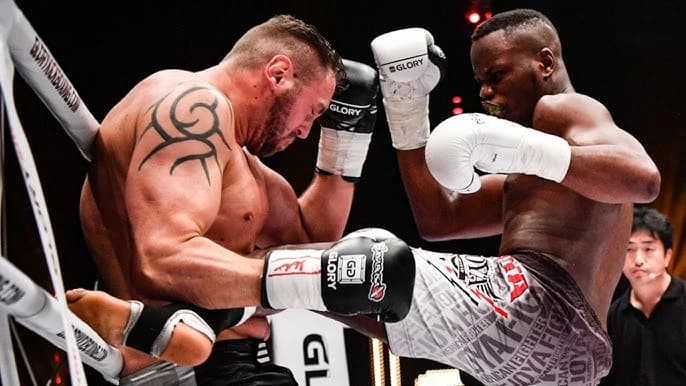
Danyo Ilunga joins DBC Germany in Essen: the Congolese-German icon in the diaspora's corner
A five-time kickboxing world champion as guest of honour at a business gathering. The surprise fades the moment you know the story.
DBC Germany
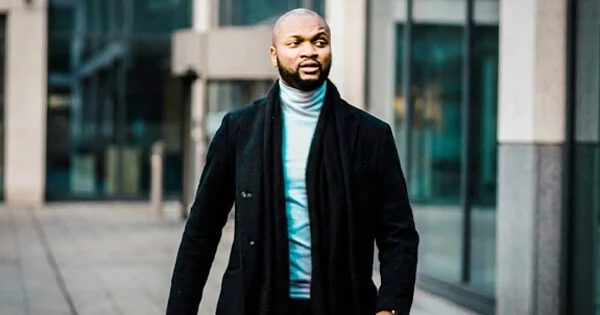
From critic to builder: Jay N. Kalala and the digital backbone of DBC
He first challenged the story of African business from a France 24 panel. Now he is the one coding the Diambilay Business Center's digital backbone. The portrait of a turn.
DBC Germany
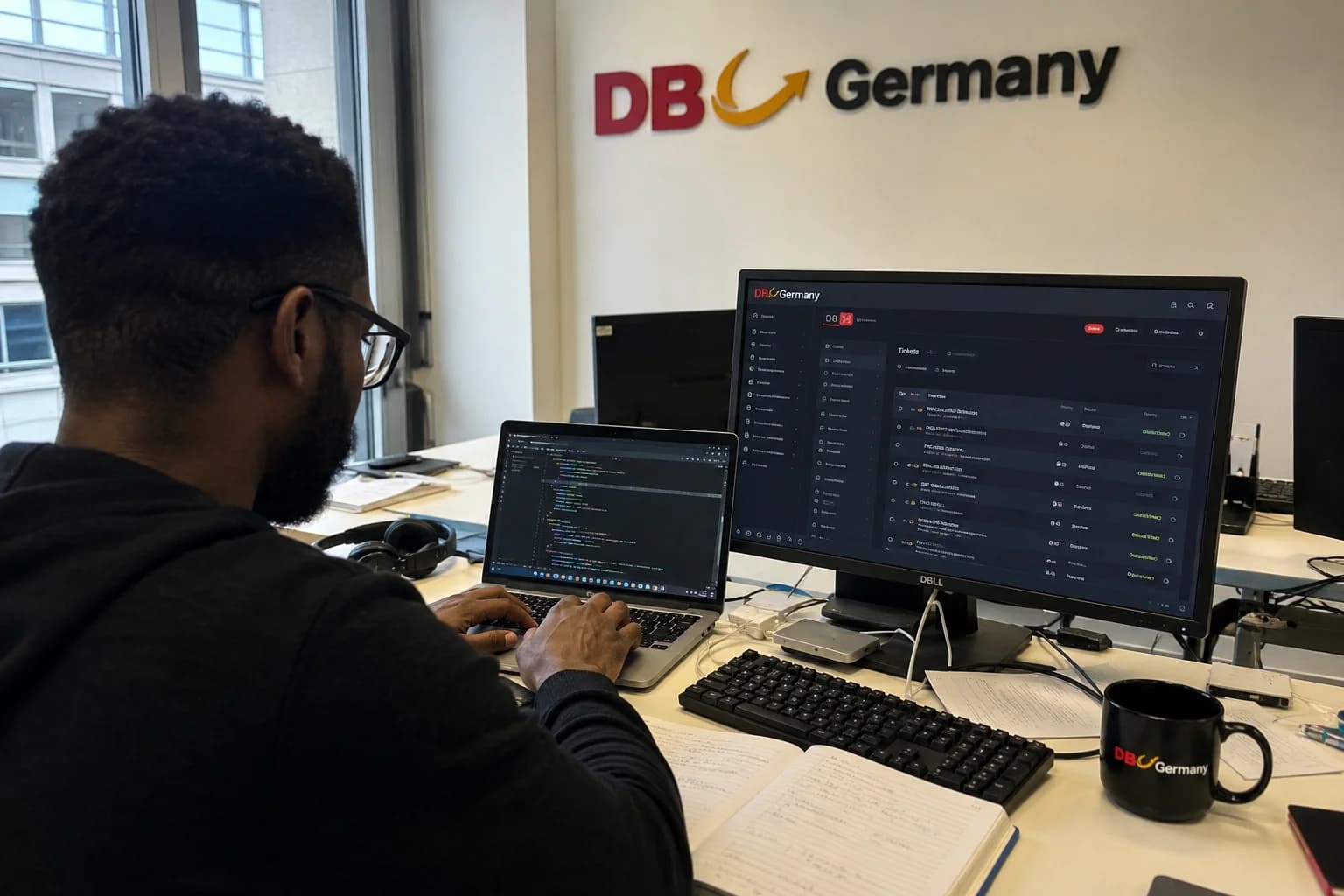
DBC Germany goes digital, betting on systems it builds itself
The Düsseldorf branch of Diambilay Business Center is trading rented software for an in-house ecosystem — and Richesses d’Afrique Masterclass Germany 2026 will be the first test.
DBC Germany